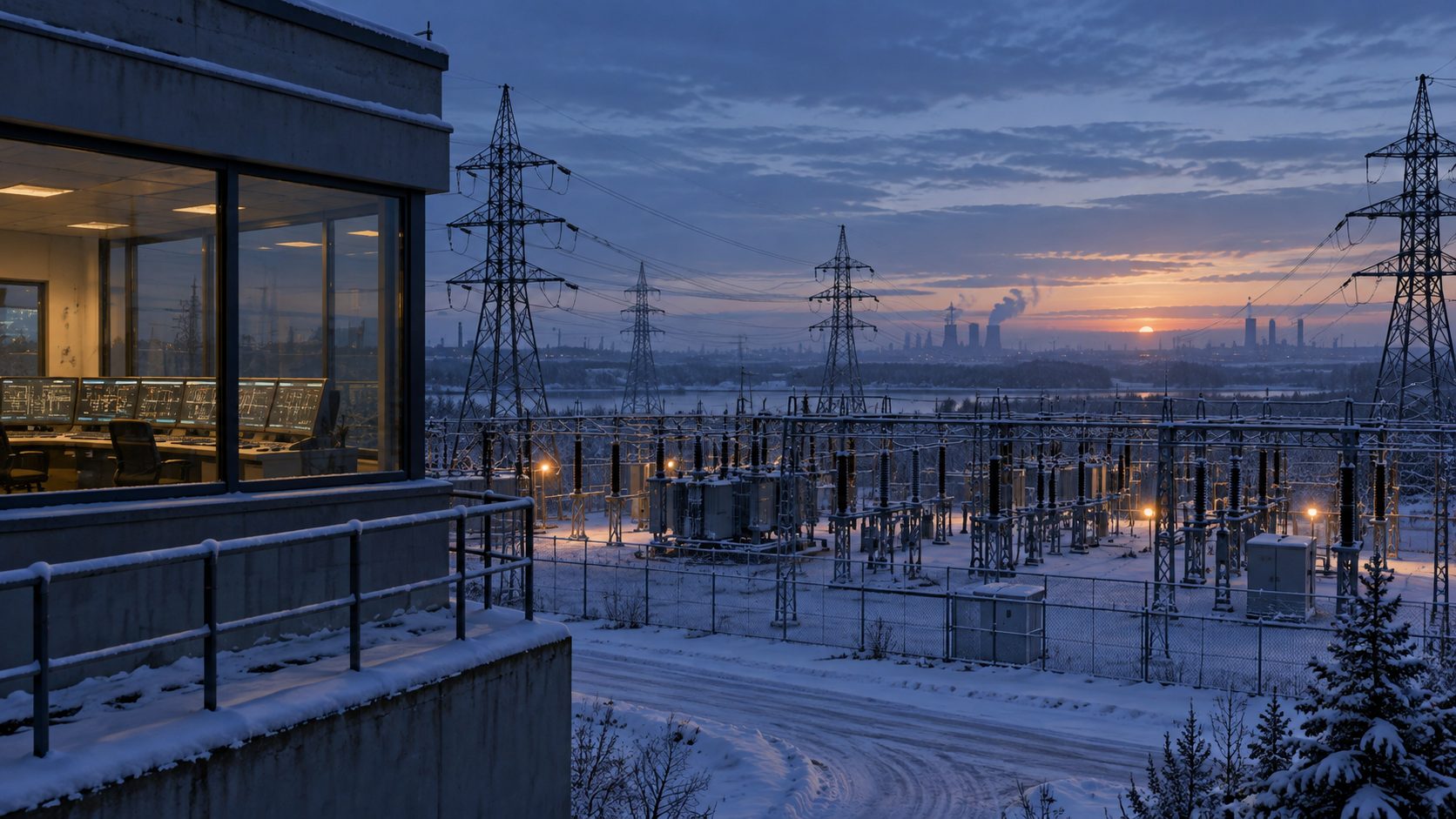
Ukrainian President Volodymyr Zelenskyy said on 11 and 12 October that Kyiv was prepared to stop strikes on energy sites if Russia did the same. A reciprocal, publicly announced 30-day pause has not been agreed by both governments.
What is known.
In an 11 October account of calls with European leaders, the Ukrainian presidency said Kyiv supported a proposed energy ceasefire. Zelenskyy’s 12 October address said Ukraine would respect such a pause if Russia reciprocated, while alleging that Russian attacks on Ukrainian energy infrastructure were continuing. These claims describe Ukraine’s position; they do not establish that Moscow has accepted matching terms.
The proposal concerns a limited class of targets, not an end to the war. For this forecast, the two governments would have to publish commitments covering electricity generation and transmission, oil and gas production, refining, and energy storage, with a stated duration of at least 30 days. A mediator’s description of a deal without both governments’ own written acceptance would be insufficient.
No new matching written announcements meeting that rule had been verified when this article was prepared on 13 October. The outcome is therefore a possible future agreement, not an event being reported as completed.
What earlier cases show.
On 25 March 2025, the White House separately reported the outcomes of U.S. technical talks with Ukrainian and Russian teams. Both summaries said the United States and the respective counterpart had agreed to develop measures for implementing a prohibition on strikes against the two countries’ energy facilities.
Those parallel statements show a route to negotiating sector-specific restraint, but they were not a demonstrated 30-day bilateral pause under this forecast’s rule. Subsequent disputes over attacks and implementation also make the earlier process an imperfect comparison. One episode supplies no defensible numerical base rate for a new agreement in the next month.
Why it is a possibility.
A limited energy arrangement could reduce disruption to civilians and fuel systems without requiring a settlement of territory or broader security questions. The United States has previously convened both sides on energy targets, and the approach of winter increases the practical value of protecting power and heat.
The obstacles are equally concrete. Kyiv says attacks have continued, Moscow has not published matching acceptance of this new proposal, and the sides could disagree over whether refineries, fuel stores, or dual-use infrastructure are protected. Even if officials explore a pause, a common public text and a minimum 30-day term must emerge before 15 November.
How the 26% was assessed.
Reference point. The March 2025 U.S.-facilitated technical statements are the closest documented reference point: both sides engaged with a prohibition on energy-facility strikes. They are one negotiated episode, not a class of comparable proposals with a denominator. No defensible numerical base rate exists for the precise 30-day announcement by 15 November 2026.
Why it could be higher. Ukraine has publicly accepted the idea conditionally, U.S. mediation has a recent technical precedent, and both sides have reasons to limit energy damage ahead of winter. A sector-specific commitment asks less than a comprehensive ceasefire.
Why it could be lower. Russia has not been verified as accepting matching terms for this proposal; Ukraine alleges continuing strikes. Agreeing exactly which facilities are protected and committing publicly for at least 30 days within about a month are substantial hurdles. The earlier parallel statements did not in themselves establish lasting compliance.
The editorial judgment. The 26% point estimate is an editorial assessment within a broad 15–35% sensitivity range. A negotiated partial pause is credible, but absent Russian acceptance and the narrow deadline make a qualifying bilateral announcement less likely than no such announcement.
Limits of the estimate. The range is editorial, not a statistical confidence interval or model output. Private negotiations are not observable, public accounts of strikes can be contested, and a modest change in proposed scope or duration could determine whether an agreement meets the frozen rule.
What could prevent it.
Ukraine says Russian strikes are continuing, and no matching Russian acceptance has been verified. Disputes over what counts as an energy target and who struck it could stop even a limited agreement.
How it will be assessed.
Resolves YES only if, after this forecast is published and by 23:59 UTC on 15 November 2026, both the Ukrainian and Russian governments publish written announcements accepting the same reciprocal commitment, lasting at least 30 days, to refrain from deliberate attacks on the other side’s electricity generation and transmission, oil and gas production, refining, and energy storage facilities. The announcements may be issued separately and need not use identical wording, but both must specify the reciprocal scope and minimum duration. A U.S. or other mediator’s announcement alone, a unilateral pledge, talks without matching commitments, or a general ceasefire proposal does not count. The forecast concerns the announcements; actual compliance for 30 days is not required for a YES resolution.
Sources and primary records
Probabilities are provisional editorial estimates, not guarantees. Sources document the present evidence and resolution rule. Read the full disclaimer.
Dated updates.
The first article, forecast rule and original probability above remain unchanged. Each update records a new assessment.
The promised energy pause is still losing ground
Originally 26% at publication
The UK prime minister's account of the 14 October meeting with President Zelenskyy says Russian attacks on Ukrainian civilians and energy infrastructure continued after President Trump's call for an energy ceasefire. The Ukrainian president had already described strikes on a gas-production facility and a gas station on 12 October. Those records weaken the case for a reciprocal 30-day pause by mid-November, but they do not make one impossible.
The original article and its 26% estimate remain unchanged. This dated update reduces the live estimate to 17%. A unilateral promise, an informal lull, or a shorter arrangement still would not meet the original rule, which requires both governments to announce the same 30-day energy-strike pause.
How the revised probability was assessed
Reference point. The prior 26% editorial estimate assumed continued diplomacy after the US announcement. The new UK government record confirms that attacks on Ukrainian energy infrastructure continued into the talks, narrowing the immediate path to a reciprocal public agreement.
What raises the chance. Ukraine continues to support an energy pause if Russia reciprocates, and the United States remains involved in the proposal.
What lowers the chance. Continuing Russian attacks on Ukrainian civilian and energy sites after the proposed pause make a sustained, matching 30-day commitment less likely before the 15 November deadline.
Editorial judgment. The current editorial estimate is 17%, down 9 percentage points from the original and previous 26%. This is a judgmental revision, not a calculated likelihood from a representative dataset.
Uncertainty. The two governments could still announce an enforceable arrangement quickly. The UK and Ukrainian statements are evidence of continued strikes, not a final resolution of the November forecast.