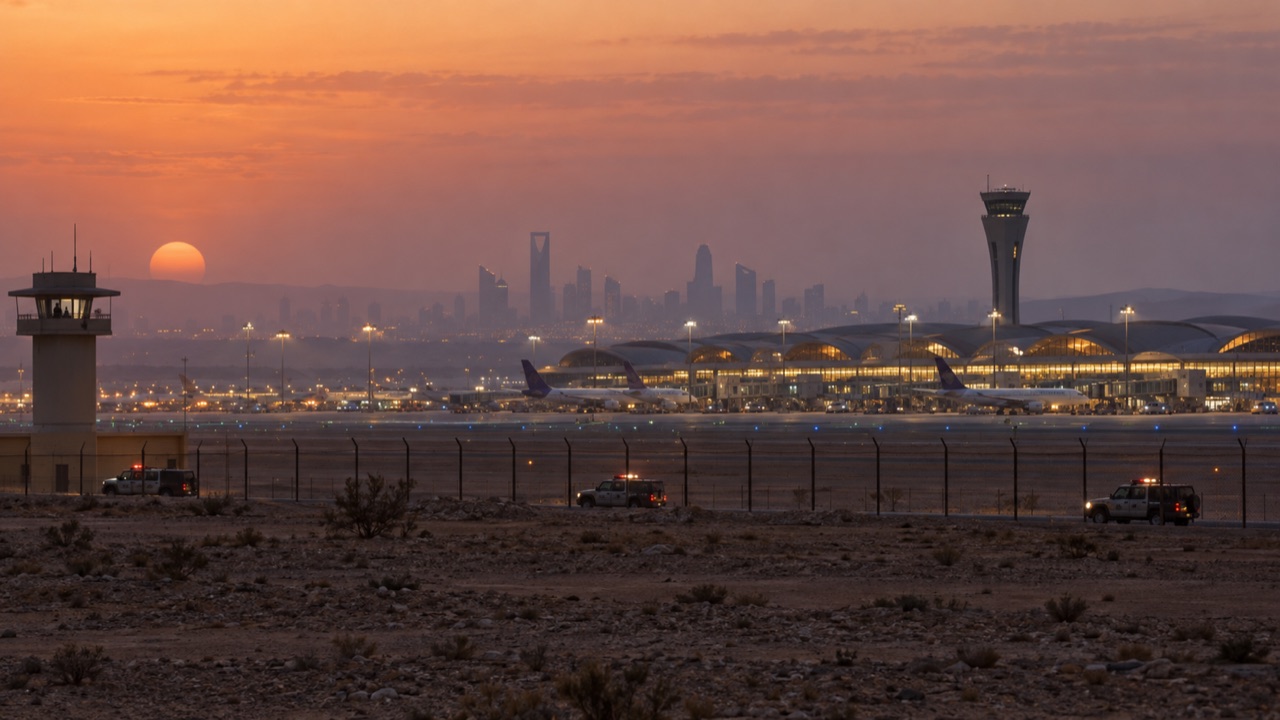
A missile attack on Riyadh's main airport has sharpened the confrontation between Saudi Arabia and Yemen's Houthi movement. A jointly announced ceasefire before the end of October remains possible, but neither side has agreed to one.
What is known.
Saudi civil aviation authorities said 12 people were killed and more than 300 injured in the 10 October airport attack. Associated Press reported on 11 October that the airport remained closed and that the Houthis threatened further strikes. The Saudi-led coalition blamed the Houthis; responsibility for individual attacks and claims about the wider campaign should be attributed to the parties making them.
The Saudi-backed Yemeni government and its coalition supporters have mounted an offensive along Yemen's Red Sea coast, according to AP reporting. The Houthis have responded with attacks on Saudi territory. Those actions give both sides bargaining leverage while also making concessions harder to sell at home.
This forecast is deliberately narrower than a Yemen peace agreement. It requires both the Saudi side and the Houthis to acknowledge the same arrangement covering cross-border attacks and Saudi-led strikes for at least seven days. Talks, a unilateral halt or a mediator's announcement alone would not qualify.
What earlier cases show.
The United Nations brokered a nationwide Yemen truce that began in April 2022 and was renewed twice. The UN said it reduced violence, increased fuel deliveries and reopened commercial flights from Sana'a. That experience shows a practical de-escalation channel, though the parties and regional conditions have since changed.
The UN envoy reported in October 2022 that an expanded renewal had not been agreed. A previous truce is therefore evidence that an arrangement can be negotiated, rather than a historical frequency that predicts this month's outcome.
Why it is a possibility.
Airport disruption, civilian casualties and the cost of defending long-range infrastructure create reasons for a limited pause. A deal focused on cross-border fire could offer a shorter path than a comprehensive settlement of Yemen's war.
The same attack and the ongoing ground campaign also reduce the room for compromise. Leaders may seek retaliation or stronger terms before accepting a public agreement. The deadline leaves less than three weeks for a shared text and two public commitments.
How the 24% was assessed.
Reference point. The 2022 UN truce establishes that negotiated pauses are feasible. It is a single precedent, not a measured base rate for Saudi-Houthi ceasefires after airport attacks. The relevant window here is only the remainder of October 2026.
Why it could be higher. Both sides face costs from attacks on civilian transport and sustained fighting; a narrow, time-limited pause could address immediate security needs without settling the whole war.
Why it could be lower. The deadly Riyadh attack, threatened further strikes, an active coalition offensive and the requirement for matching public announcements each make the specified outcome harder than informal talks or a unilateral pause.
The editorial judgment. A judgment range of roughly 15–35% was used for this tightly defined, short-window outcome. The unchanged published point estimate is 24%, near the middle of that range. It gives de-escalation a real chance while making continued confrontation the more likely result.
Limits of the estimate. The range is an editorial sensitivity band, not a statistical confidence interval. There is no calibrated set of comparable cases from which 24% can be calculated. A credible mediator proposal or reciprocal restraint would support a new, dated estimate; the original 24% remains in the record.
Analysis expanded on 11 Oct 2026. The original published probability and decision rule are unchanged.
What could prevent it.
The reported attacks and recent coalition advance may harden positions, while disputed responsibility and incompatible conditions could prevent a jointly acknowledged deal.
How it will be assessed.
Resolves YES only if, after publication and by 23:59 UTC on 31 October 2026, the Saudi government or Saudi-led coalition and the Houthi movement both publicly announce acceptance of the same ceasefire agreement covering cross-border attacks and Saudi-led strikes in Yemen for at least seven days. A unilateral pause, private talks, or a ceasefire announced only by a mediator does not count.
Sources and primary records
Probabilities are provisional editorial estimates, not guarantees. Sources document the present evidence and resolution rule. Read the full disclaimer.
Dated updates.
The first article, forecast rule and original probability above remain unchanged. Each update records a new assessment.
Evidence review before the decision date
Originally 24% at publication
Saudi aviation authorities reported another attack on Riyadh's King Khalid International Airport on 11 October and said safety and damage assessments were continuing. A four-country statement condemned the continuing Houthi attacks and demanded they stop. The escalation narrows the remaining window for a mutually announced ceasefire by 31 October. Mediation could still restart, so this is a low but nonzero editorial estimate, not a measured base rate.
How the revised probability was assessed
Reference point. A mutually announced ceasefire remains possible until the deadline.
What raises the chance. A renewed mediation channel could still produce a joint statement.
What lowers the chance. The airport attack and four-country condemnation show continued escalation.
Editorial judgment. The attack and condemnation outweigh the remaining diplomatic possibility, lowering the estimate from 24% to 10%.
Uncertainty. The parties could change course before 31 October; no joint ceasefire has been verified.