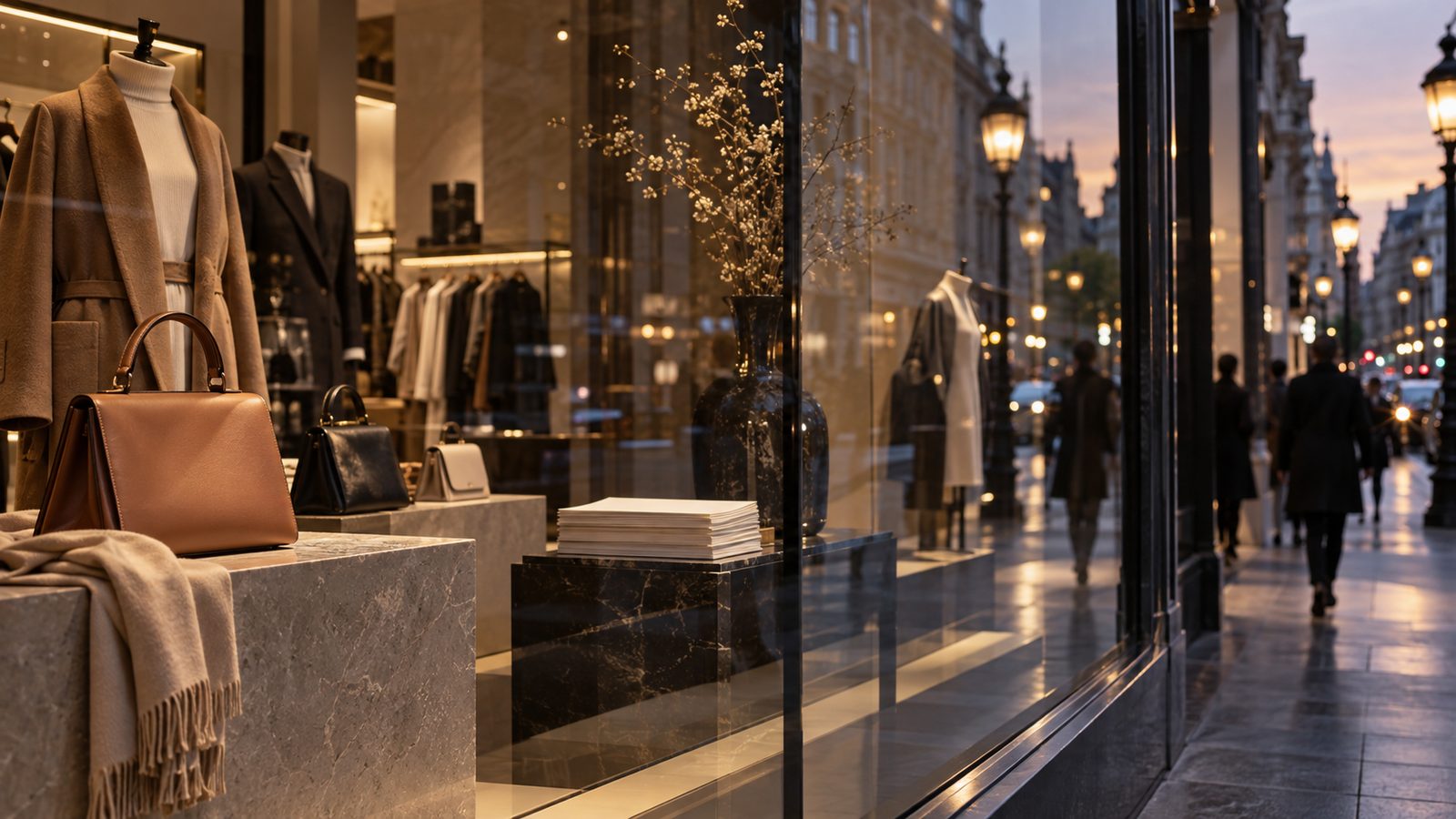
LVMH said on 12 October that organic sales in its Fashion & Leather Goods division fell 5% year on year in the third quarter. A return to positive growth in the final quarter is possible, but no fourth-quarter result has been published.
What is known.
The group's official third-quarter revenue release put Fashion & Leather Goods at €8.245 billion for the quarter, with a 5% organic decline from the same period of 2025. LVMH cited weaker demand in China while reporting good growth in the United States, Europe and Japan at the group level. Results for other divisions and the group as a whole do not determine the outcome of this forecast.
The same LVMH table shows a 2% organic fall in the first quarter of 2026 and 1% growth in the second quarter for Fashion & Leather Goods. The year so far has therefore moved across the zero line, rather than falling at one constant rate. The company expects to report annual results in early 2027; its official fourth-quarter organic figure will provide the checkable record.
The proposed outcome is narrowly defined as at least +1% organic year-on-year growth for this division in the fourth quarter of 2026. Sales translated at current exchange rates, a rise in another business, or a narrative of improvement without the qualifying published figure would not settle it as a success.
What earlier cases show.
LVMH's 2025 annual release reported a 3% organic decline for Fashion & Leather Goods in the fourth quarter of that year. That weaker comparison can make a positive year-on-year 2026 fourth quarter easier to reach than a comparison with a booming quarter, although it says little on its own about actual demand over the coming months.
The first three quarters of 2026 show a decline, a small increase and a larger decline in succession. These few observations describe the current cycle; they are not a representative sample of luxury-sector rebounds. No defensible numerical base rate exists for crossing the +1% threshold in the next reported quarter.
Why it is a possibility.
A small rebound could come from demand in the United States and Europe, new collections and the relatively soft fourth quarter of 2025. Because the threshold is only +1%, the outcome does not require a strong overall luxury recovery.
The countercase is a continuing Chinese slowdown, which LVMH specifically linked to the third-quarter weakness. A good product reception in selected houses or regions may fail to lift the whole division. Exchange-rate and scope effects will be stripped out by the organic measure, so reported euro sales cannot substitute for the specified result.
How the 38% was assessed.
Reference point. LVMH's own quarterly tables give a relevant recent baseline: Fashion & Leather Goods organic change was -2%, +1% and -5% in the first three quarters of 2026, and -3% in the fourth quarter of 2025. These are four selected observations from one company and shifting markets, with no defensible denominator for an empirical rebound frequency. No defensible numerical base rate exists for this exact threshold.
Why it could be higher. The division posted +1% in the second quarter, US demand and some product lines remained firm according to LVMH, and a 2025 fourth-quarter decline lowers the year-earlier comparison. The required result is modest positive growth, not a return to earlier peaks.
Why it could be lower. The latest quarter was -5%, a larger fall than either the first-quarter decline or the first-nine-month result. LVMH identified a China demand slowdown, and the next quarter may be too soon for other markets to offset it.
The editorial judgment. The published 38% is an editorial point estimate within a 25–50% sensitivity range. The recent +1% quarter and comparison effect keep a rebound credible; the sharper latest decline and China exposure make a non-positive print somewhat more likely.
Limits of the estimate. The range is an editorial judgment band, not a statistical confidence interval, fitted model or investment return forecast. There is no public fourth-quarter sales data yet, and geographic demand could change quickly. The resolution uses the official organic whole-number percentage available by 15 February 2027.
What could prevent it.
The third-quarter fall was sharper than the first-half trend and LVMH explicitly cited weaker demand in China. Growth elsewhere may not offset that market in the final quarter; the comparison and product launches do not guarantee a positive result. The company could also delay or change the format of its annual disclosure.
How it will be assessed.
YES if an official LVMH revenue release published by 23:59 UTC on 15 February 2027 reports Fashion & Leather Goods organic revenue change for the fourth quarter of 2026 versus the fourth quarter of 2025 at +1% or higher, as a whole-number percentage. Group-level growth, reported-currency sales, and another business division do not count. If no qualifying official fourth-quarter figure is published by the deadline, or it is 0% or lower, NO.
Sources and primary records
Probabilities are provisional editorial estimates, not guarantees. Sources document the present evidence and resolution rule. Read the full disclaimer.