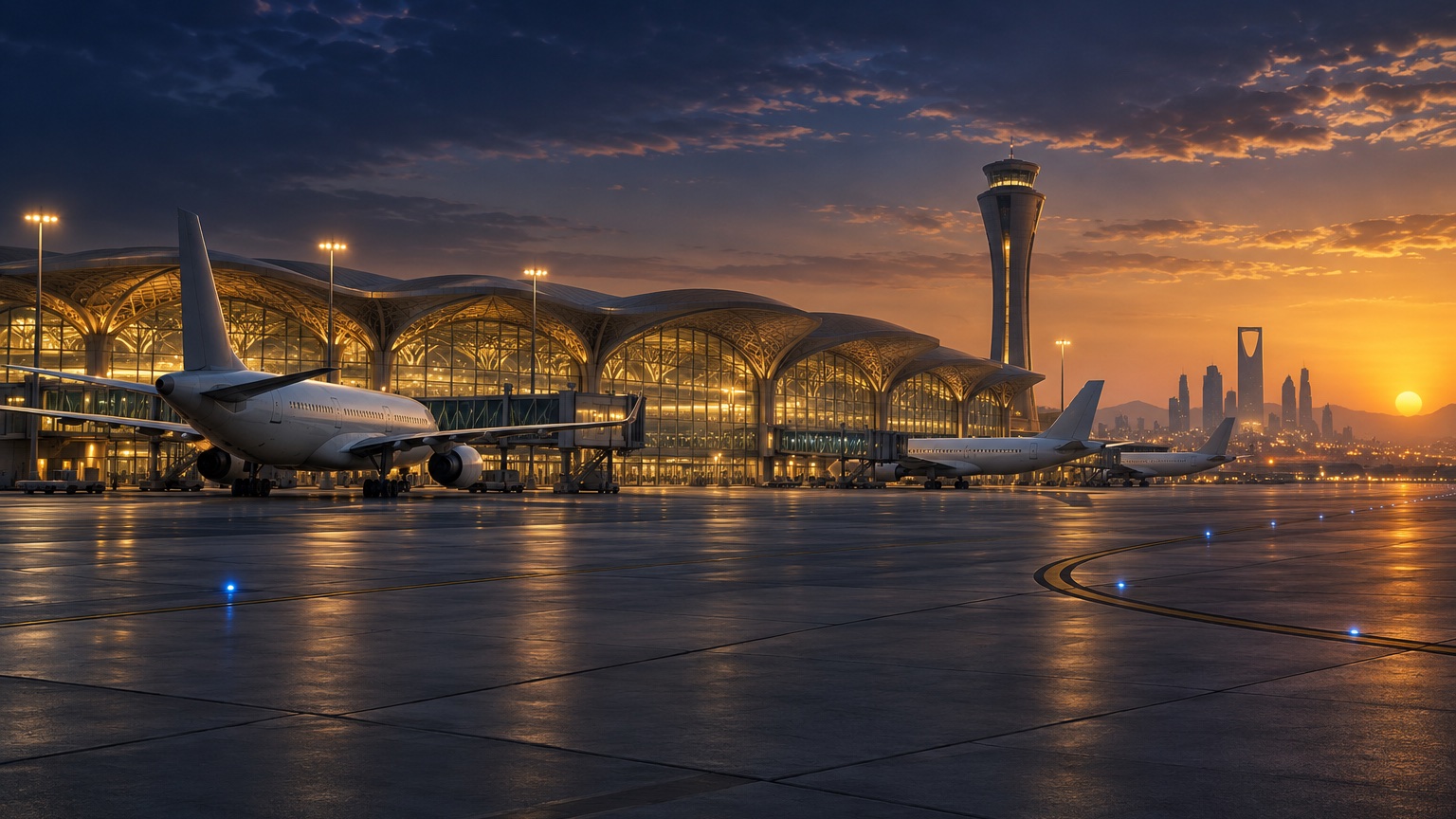
Saudi authorities are assessing King Khalid International Airport after another attack. The forecast asks whether scheduled international passenger departures will actually restart by 25 October, a narrower test than declaring the airport fully recovered.
What is known.
Saudi Arabia's General Authority of Civil Aviation said on 11 October that the airport had been targeted by another attack and that technical and safety assessments were continuing. Airline schedule changes indicate disruption, but a timetable for full restoration is not established by those notices.
King Khalid is Riyadh's main international airport. A verified scheduled passenger departure after publication is the observable threshold; a promise to reopen, a domestic service or an empty aircraft movement would not meet it.
The official airport flight information and a named airline's departure record should be checked together at resolution. If an official record cannot establish a qualifying flight, the call should remain unresolved until the record is sufficient, rather than be inferred from a booking page.
What earlier cases show.
Airports can resume service in stages after a security incident, with some airlines or routes returning before others. There is no directly comparable event set here from which a reliable two-week reopening rate can be calculated.
An airport's operational status may change quickly. The forecast therefore uses a specific departed flight, time window and passenger-service type instead of a vague reopening label.
Why it is a possibility.
Riyadh's international connectivity gives regulators, operators and airlines a strong reason to restore departures promptly once the site is safe. A two-week window allows inspections and staged service recovery.
Additional attacks, damage to critical systems or airspace restrictions could keep ordinary international passenger departures suspended past the deadline. Published schedules can also overstate real operations when flights are cancelled late.
How the 62% was assessed.
Reference point. The 11 October official update establishes continued assessment after a second attack. The probability is an editorial operational judgment; no official reopening probability or comparable-event base rate was available.
Why it could be higher. The airport's importance and the possibility of phased recovery support at least one scheduled international departure within two weeks.
Why it could be lower. A repeated attack and unknown inspection findings could extend the interruption. A planned flight that never departs does not count.
The editorial judgment. A broad 45–75% range was used, with 62% as the published point estimate. This favors a limited restart while allowing substantial weight for security and infrastructure delays.
Limits of the estimate. The range is a sensitivity band, not a calibrated airport-risk model. New official operating notices or verified flights would justify dated updates, without changing the original 62% used for scoring.
Analysis expanded on 12 Oct 2026. The original published probability and decision rule are unchanged.
What could prevent it.
Additional attacks, infrastructure damage, airspace restrictions or extended inspections could delay service beyond the two-week window.
How it will be assessed.
Count YES only if at least one scheduled international passenger flight departs King Khalid International Airport in Riyadh between publication and 23:59 Saudi time on 25 October 2026, confirmed by an official airport or airline flight record. A domestic, charter, cargo, ferry or repositioning flight does not qualify. A restart announcement without a qualifying departure does not qualify.
Sources and primary records
Probabilities are provisional editorial estimates, not guarantees. Sources document the present evidence and resolution rule. Read the full disclaimer.