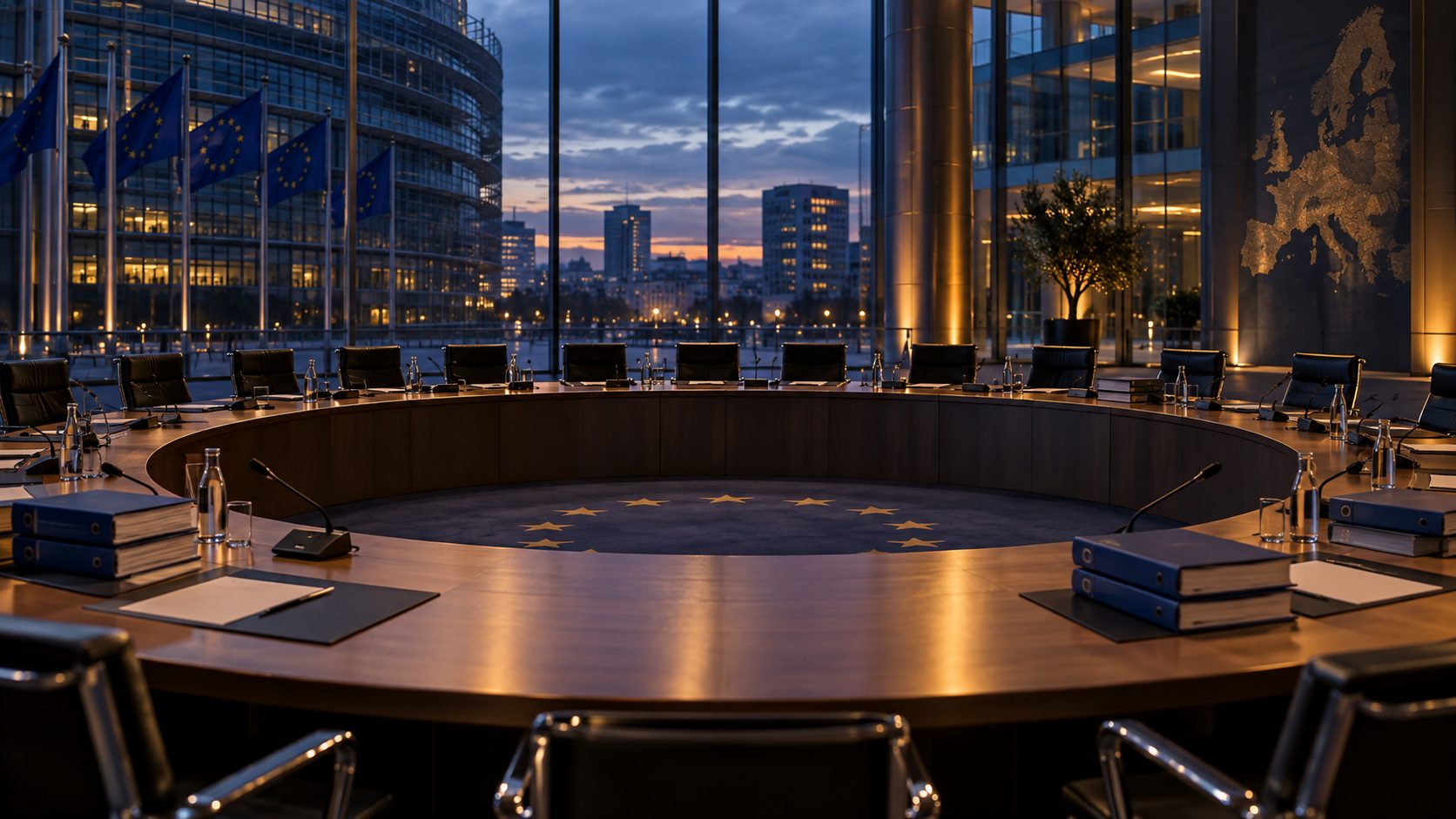
The European Union has an end-of-2026 target for a political deal on its next seven-year budget. As of 12 October, a revised negotiating document has been issued and leaders are preparing to discuss it, but no overall agreement has been announced.
What is known.
The Council of the EU says the Commission proposed a nearly €2 trillion multiannual financial framework for 2028–2034 in July 2025. The package would set the Union’s spending ceilings and reorganise programmes spanning agriculture, regional support, defence, competitiveness and other priorities. The Council says the Irish presidency presented a third negotiating box, including figures, on 10 October 2026.
At the 22 September General Affairs Council, ministers debated both expenditure priorities and revenue sources. The Council said leaders aim for an agreement between member states by the end of 2026 so that the related legislation can be adopted during 2027 and funding can continue when the new period starts in January 2028.
The European Council’s 15–16 October agenda includes the long-term budget. The scheduled discussion and the negotiating box are signs of an active process; neither is itself a deal. This forecast concerns a leader-level political agreement on the overall framework, not final legal adoption or a vote in the European Parliament.
What earlier cases show.
The previous 2021–2027 framework was part of a political agreement reached by EU leaders at a special European Council in July 2020, less than six months before it began. The Council adopted the regulation in December after Parliament’s consent. That sequence shows how a leader-level bargain can precede the final legal steps.
The 2014–2020 framework also required lengthy negotiations. These two cycles are useful timing comparisons, but they are too few, and the political circumstances too different, to provide a reliable numerical base rate for a deal by this particular end-of-2026 target.
Why it is a possibility.
An October negotiating box with figures gives governments a document on which to trade concessions. The Council has publicly tied a 2026 political agreement to orderly legislation in 2027. A bargain at the October or December leaders’ meetings could preserve that timetable without requiring every implementing act to be finished this year.
The opposing pressure is substantial. Changes to the size and distribution of a nearly €2 trillion framework can alter national contributions and funding for farmers, regions, security and research. A single member state can prevent the eventual unanimous Council regulation; leaders may prefer to defer an incomplete overall bargain rather than settle its central figures in the final weeks of 2026.
How the 42% was assessed.
Reference point. The reference points are the previous two seven-year framework negotiations, especially the July 2020 leader-level agreement for a period starting in January 2021. They show that a deal can arrive closer to the start of the budget period than the current end-2026 target. Two distinct cycles are not a defensible denominator for a statistical frequency, so no numerical base rate is claimed.
Why it could be higher. The Irish presidency’s 10 October negotiating box contains figures, ministers have debated spending and revenue, and the October European Council is set to discuss the framework. The stated need for 2027 implementing legislation creates a real incentive to settle the political outline soon.
Why it could be lower. The proposal spans almost €2 trillion and competing national and sectoral priorities. Unanimity is required for final Council adoption, and the prior 2021–2027 political deal came less than six months before that framework began. The current target would require an earlier bargain relative to the 2028 start.
The editorial judgment. A broad editorial range of 30–55% reflects the push of the official timetable against the complexity and historical timing of these negotiations. The published 42% point estimate sits within that range: a substantial possibility, while a deal slipping into 2027 remains somewhat more likely.
Limits of the estimate. This is an editorial sensitivity band, not a statistical confidence interval or a probability calculated from two past cycles. Positions can shift quickly at leaders’ meetings, and a public negotiating box reveals little about private concessions. The original 42% and its decision rule remain fixed after publication.
What could prevent it.
Unanimity among member states is required for the eventual MFF regulation, while agriculture, cohesion, defence, competitiveness and new revenue proposals compete for resources. Earlier seven-year frameworks reached leader-level political deals closer to their start dates; leaders may leave a full compromise until 2027.
How it will be assessed.
Resolves yes only if, by 23:59 UTC on 31 December 2026, the European Council or Council of the EU publishes an official conclusion or press release saying EU heads of state or government have reached an overall political agreement on the 2028–2034 multiannual financial framework, including its total spending ceiling and main expenditure headings. A negotiating box, partial sectoral deal, summit discussion, or agreement announced only in 2027 does not count. Formal adoption of the regulation and Parliament's consent need not occur by the deadline.
Sources and primary records
- The EU's long-term budget for 2028–2034, reviewed 10 October 2026
- General Affairs Council, 22 September 2026
- Agenda for the European Council, 15–16 October 2026
- Special European Council, 17–21 July 2020
- Council adoption of the 2021–2027 MFF in December 2020
- Council explanation of MFF unanimity and Parliament consent
- Council archive on the 2014–2020 long-term budget
Probabilities are provisional editorial estimates, not guarantees. Sources document the present evidence and resolution rule. Read the full disclaimer.