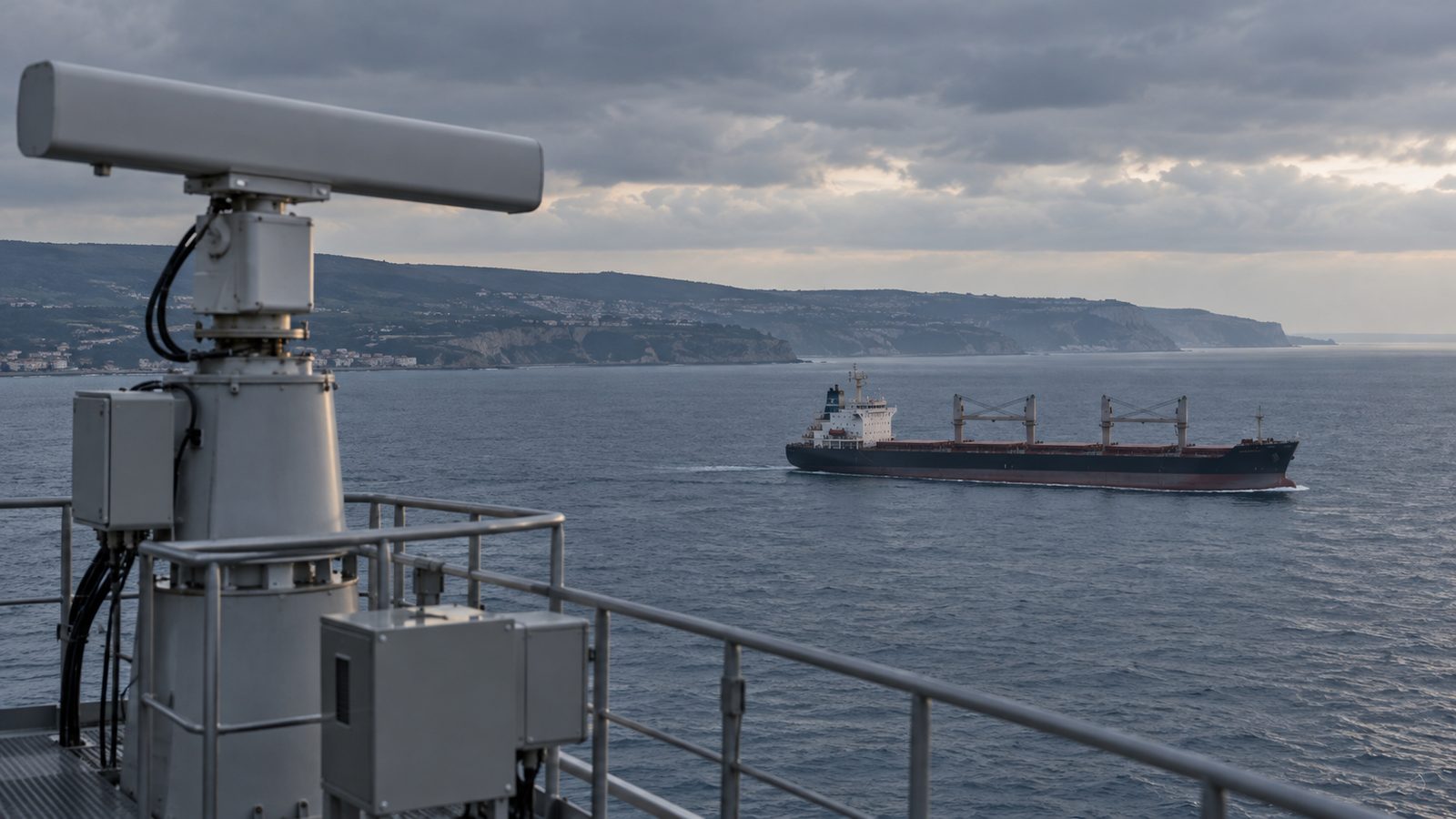
Bulgaria has sought allied help after another reported attack on a merchant ship near its Black Sea coast. As of 13 October, Sofia has not publicly requested the formal NATO consultations that would settle this forecast.
What is known.
The Bulgarian government said a distress call came from a ship about 18 miles east of Byala early on 13 October, prompting a rescue operation and an emergency security meeting. Its account described another drone attack on a merchant vessel. The government said it did not yet have clear evidence identifying who carried out the strikes; the suspected perpetrator should not be treated as established.
On 12 October, Sofia requested technical help from the EU and NATO for an investigation into attacks on merchant ships in Bulgaria's Black Sea exclusive economic zone. The prime minister also spoke with NATO's secretary general and the European Commission president on 13 October. Those steps show growing international coordination, but a request for technical assistance or a phone call is not a formal invocation of Article 4.
Article 4 allows any NATO member to ask the North Atlantic Council to consult when it considers its territorial integrity, political independence or security threatened. This forecast concerns Bulgaria making that specific treaty request over the October ship attacks; it does not require NATO to identify an attacker or to take military action.
What earlier cases show.
NATO records that Bulgaria joined seven other allies in an Article 4 request when Russia launched its full-scale invasion of Ukraine in February 2022. Poland invoked the same article after drones violated its airspace in September 2025. Those precedents show the mechanism can be used during a fast-moving security episode, including before any collective-defence decision.
Neither precedent is a close match for merchant-ship strikes in an exclusive economic zone. NATO's published list records nine Article 4 invocations from 1949 through September 2025, but it does not supply the number of comparable incidents that did not lead to a request. It is therefore not a usable hit-rate denominator for this forecast.
Why it is a possibility.
Repeated danger to civilian shipping near Bulgaria's coast could push the government to move from bilateral calls and investigative assistance to a formal alliance discussion. Article 4 offers a political consultation route without asserting that the conditions for collective defence have been met.
The alternative path is already visible: Sofia may obtain technical support, coordinate maritime security and raise the matter at EU meetings without invoking the treaty. Bulgaria's foreign minister told the Bulgarian News Agency on 10 October that consultations had effectively taken place after the earlier strikes, irrespective of a formal Article 4 invocation. Uncertain attribution and the location of the incidents outside territorial waters may make a formal request less attractive.
How the 30% was assessed.
Reference point. NATO's nine recorded Article 4 invocations through September 2025 include Bulgaria's 2022 request and Poland's 2025 drone-related request. These are selected security precedents, not a set of comparable Black Sea shipping incidents with a known denominator. No defensible numerical base rate exists for a Bulgarian request over these ship attacks within one month.
Why it could be higher. The Bulgarian government reported another attacked ship on 13 October after earlier incidents, convened an emergency security meeting, and has already asked NATO for assistance. NATO's formal consultation mechanism can be triggered by a perceived security threat without waiting for a collective-defence decision.
Why it could be lower. The government says attribution is not yet clear. The foreign minister has indicated that allied consultations may already be occurring without a formal Article 4 request. The reported attacks are in or near an exclusive economic zone rather than a confirmed strike on Bulgarian land. A treaty request is a discretionary political choice.
The editorial judgment. The 30% published estimate is an editorial judgment within a broad 15–40% sensitivity range. A further incident and active NATO contact make a request plausible, while the available lower-profile responses and incomplete attribution leave it less likely than no formal request by 13 November.
Limits of the estimate. The range is editorial, not a statistical confidence interval or a model output. The investigation, private allied discussions and any further attacks could change the political decision quickly. The published point estimate and resolution rule remain fixed.
What could prevent it.
The government says it does not yet have clear evidence assigning responsibility. Technical assistance, bilateral calls and a European Council discussion may address the danger without the political signal of a formal Article 4 request. The incidents also occurred in or near the exclusive economic zone, a setting distinct from a confirmed strike on Bulgarian territory.
How it will be assessed.
YES if, by 23:59 UTC on 13 November 2026, an official Bulgarian government or NATO statement explicitly confirms that Bulgaria formally requested consultations under Article 4 of the North Atlantic Treaty because of the October 2026 attacks on merchant ships in or near Bulgaria's Black Sea exclusive economic zone. Requests for technical help, informal discussions, other allies' Article 4 requests, or consultations over unrelated incidents do not count. Otherwise NO.
Sources and primary records
- Prime minister calls emergency security meeting after a new ship attack near Byala, 13 October 2026
- Bulgaria asks EU and NATO for technical assistance with Black Sea ship attack investigation, 12 October 2026
- Prime minister speaks with NATO and EU leaders about Black Sea merchant-ship attacks, 13 October 2026
- The consultation process and Article 4
- Bulgaria's foreign minister discusses Article 4 and Black Sea ship attacks, 10 October 2026
Probabilities are provisional editorial estimates, not guarantees. Sources document the present evidence and resolution rule. Read the full disclaimer.