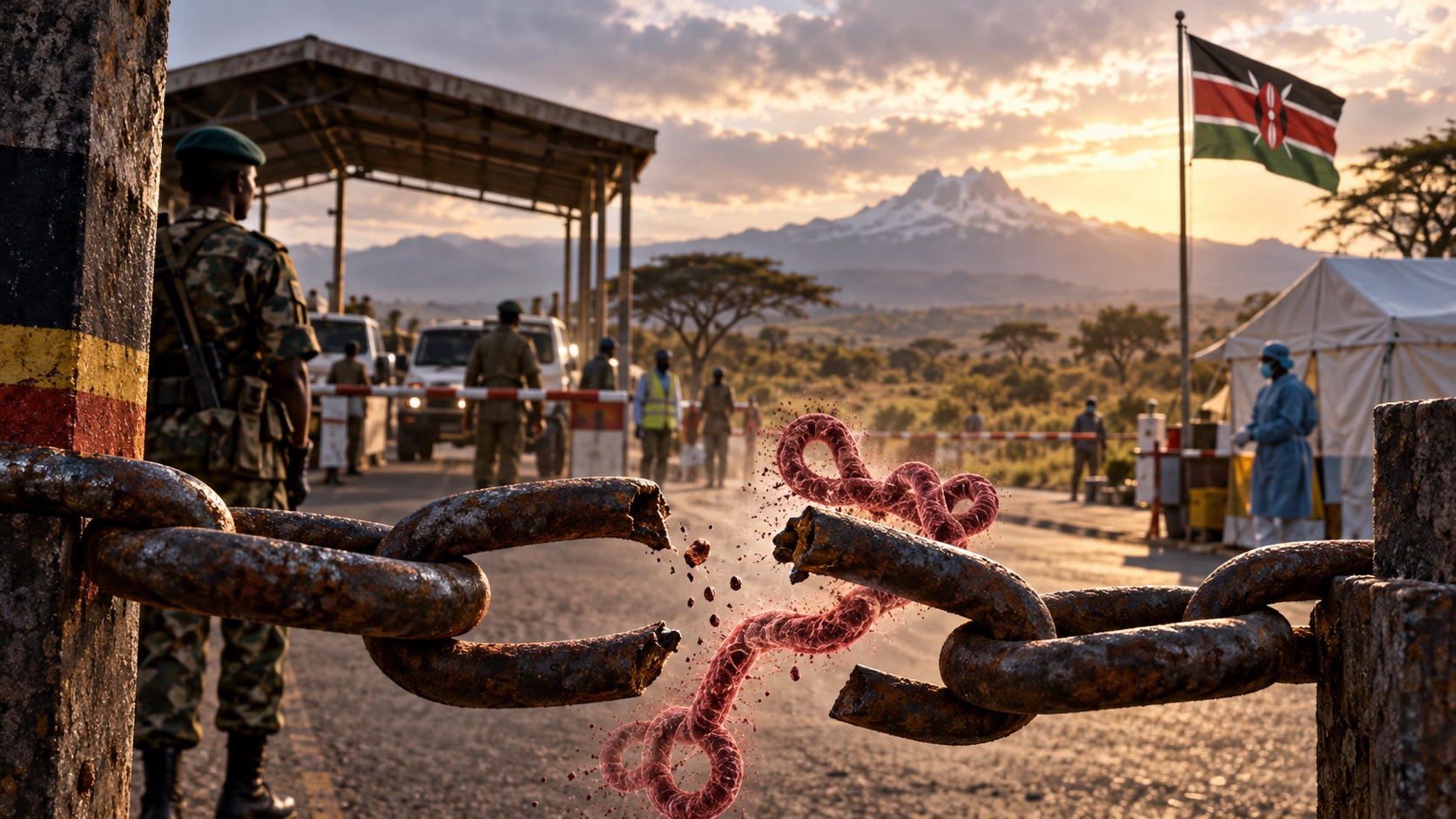
The first imported Kenyan case could either end as an isolated tragedy or begin a new chain.
What is known.
WHO reported 8,728 confirmed Bundibugyo virus disease cases, 4,205 deaths, and spread across seven DRC provinces as of 6 October; Kenya had reported an imported case.
The question in this article is narrower than the general hazard: YES only if WHO or Kenya’s Ministry of Health confirms at least one laboratory-confirmed Bundibugyo case acquired inside Kenya from 16 October through 31 December 2026, published by 31 January 2027. Additional imported cases do not count. The source documents what was known at publication, not proof that the forecast has come true.
What earlier cases show.
The current reference point comes from WHO's published record. Forecasts of disasters can fail because a risk signal is not a local outcome, and because official reporting and verification can lag real-world events.
Why it is a possibility.
WHO reported an imported case in Kenya and active contact tracing after travel from DR Congo via Uganda.
Isolation and contact tracing may prevent any secondary infection in Kenya.
How the 31% was assessed.
Reference point. The published 31% is an editorial judgment from the WHO evidence available on 15 October 2026, not a measured frequency for this exact event.
Why it could be higher. WHO reported an imported case in Kenya and active contact tracing after travel from DR Congo via Uganda.
Why it could be lower. Isolation and contact tracing may prevent any secondary infection in Kenya.
The editorial judgment. A 31% point estimate allows the defined event a real possibility by 2027-01-31 while respecting the countercase. The probability is frozen at publication for scoring.
Limits of the estimate. Official data can be delayed or revised, and a broad regional warning does not settle a specific event. The original rule and deadline control the result; a later evidence update may change the displayed current estimate without rewriting this article.
What could prevent it.
Isolation and contact tracing may prevent any secondary infection in Kenya.
How it will be assessed.
YES only if WHO or Kenya’s Ministry of Health confirms at least one laboratory-confirmed Bundibugyo case acquired inside Kenya from 16 October through 31 December 2026, published by 31 January 2027. Additional imported cases do not count.
Sources and primary records
Probabilities are provisional editorial estimates, not guarantees. Sources document the present evidence and resolution rule. Read the full disclaimer.